
…Says petrol can start at ₦605/litre
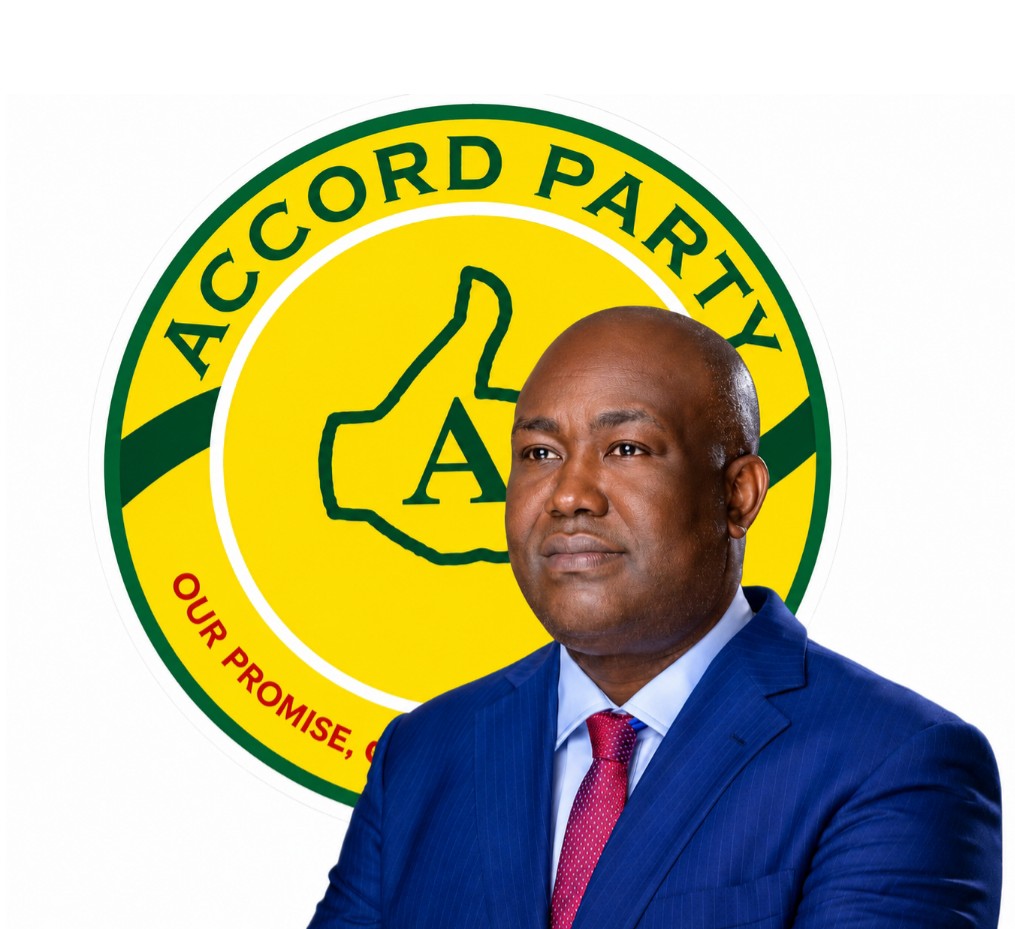
Accord Party presidential candidate, Dr. Gbenga Olawepo-Hashim, has promised to give Nigerian refineries access to locally produced crude at a strategic domestic price if elected in 2027, saying the policy would help them compete more effectively across Africa and international markets.
Hashim said the proposed framework would cover the Dangote Refinery and other qualifying refineries, with the broader aim of retaining more value from Nigeria’s crude within the domestic economy.

He made the declaration at the weekend in Ilorin, Kwara State, during a Diaspora Dialogue on “Fuel Subsidy and the Politics of 2027.” The session was anchored by Prof. Farooq Kperogi, Prof. Moses Ochonu and Dr. Osmund Agbo. The remarks were reported on September 27, 2026.
Speaking against the backdrop of concerns over petrol prices and global energy markets, Hashim argued that Nigeria had for decades treated crude primarily as an export commodity instead of using it as a foundation for industrial development.
He said his proposed Energy First policy would seek to reverse that approach by placing locally produced crude at the centre of Nigeria’s refining and petrochemical industries.
«“Our crude is our strategic advantage. We will put that advantage behind Nigerian industry.”»
According to Hashim, the Dangote Refinery and other Nigerian refineries that meet specified requirements would be able to access crude under a strategic domestic pricing arrangement rather than competing solely under international crude economics.
“If the crude is Nigerian and the refinery is Nigerian, the Nigerian economy must capture the advantage,” he said.
He stressed that the proposal would not amount to preferential treatment for any single company, insisting that qualifying existing and new refineries would have access to the same framework.
“This is not a Dangote subsidy. It is a Nigerian industrial strategy,” Hashim said.
The Accord candidate also proposed increasing Nigeria’s domestic refining capacity by an additional one million barrels per day within three years, using direct government investment and strategic joint ventures.
He said the objective would extend beyond producing more petrol, with Nigeria positioned as a major African refining and petrochemical hub.
“We want to be Africa’s refining and petrochemical hub, not just a huge crude exporter,” he said.
Hashim said the emergence of the Dangote Refinery had demonstrated the capacity of Nigerian capital to undertake large-scale energy projects, adding that government should provide the infrastructure, regulatory certainty and strategic support needed for local energy companies to compete internationally.
“We want Nigerian refineries supplying Africa. We want Nigerian petrochemicals companies competing globally. We want Nigerian energy traders operating internationally,” he said.
He also linked the proposed refinery expansion to a plan to increase crude production, saying an Accord administration would seek to recover approximately 3,000 shut-in and non-producing oil wells.
Hashim said his target would be to raise Nigeria’s crude production towards four million barrels per day within 24 months of assuming office.
He proposed restoring commercially viable wells, improving production infrastructure and evacuation systems, as well as addressing security challenges affecting oil-producing areas.
“It makes no economic sense for a country, with thousands of oil wells sitting idle, to behave as though crude is scarce,” he said.
Hashim, however, said increased crude production should not simply translate into increased exports.
“The real question is not whether Nigeria can produce four million barrels. The real question is: what will Nigeria do with four million barrels?” he asked.
On petrol pricing, Hashim reiterated his proposal for a ₦605-per-litre starting price, arguing that lower energy costs should ultimately come from increased production and refining rather than permanent government subsidies.
“₦605 is not our destination. It is a starting point in a transition from subsidising consumption to building productive capacity,” he said.
He said the longer-term objective was to bring petrol prices down towards ₦200–₦300 per litre, depending on increased crude production, expanded domestic refining, improved efficiency and lower logistics costs.
Hashim also said Nigeria’s energy strategy should not be limited to petrol, arguing that crude could support the production of diesel, aviation fuel, lubricants, plastics, fertiliser feedstock and other petrochemical products.
He proposed an integrated energy ecosystem supported by pipelines, ports, storage facilities, electricity, transportation infrastructure, security and predictable regulation.
“Government will build the ecosystem. Nigerian entrepreneurs will build the companies. Nigerian companies will conquer the markets,” he said.
According to Hashim, the ultimate objective of the Energy First policy is to ensure that a greater share of the wealth generated from Nigeria’s crude is captured within the country through local industries, jobs and globally competitive Nigerian companies.
He summed up the proposal with the phrase: “Local crude. Local refining. Global products. Global markets. Nigerian companies. Global energy power.”