
The Nigerian Society of Engineers (NSE), Osogbo (Virtuous Branch), has called for sustained investment in infrastructure, improved grid monitoring and stronger operational practices to address Nigeria’s recurring electricity grid collapses and nationwide blackouts.
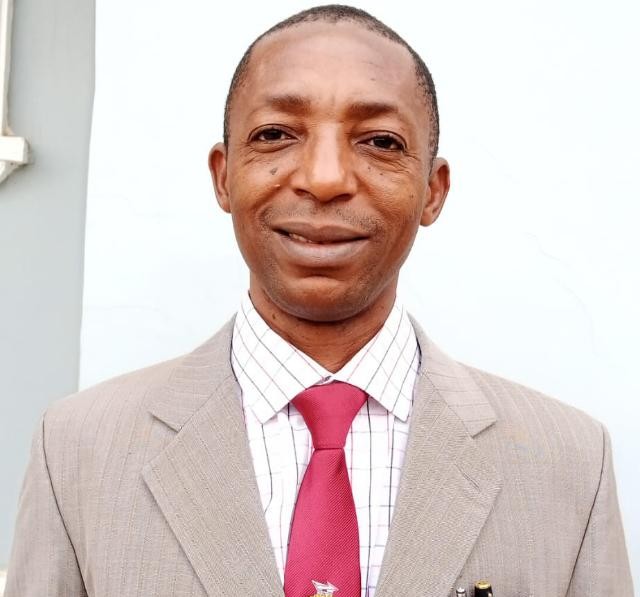
The call was made by Engr. Francis Okoro Ugwute, a Fellow of the Nigerian Society of Engineers and seasoned electrical power system engineer, during his appearance on the Society’s monthly public education programme, Engineering & Society, designed to enlighten the public on engineering issues affecting everyday life.
Engr. Okoro noted that frequent electricity grid disturbances remain a major challenge to Nigeria’s economic growth, industrial productivity and quality of life. He explained that power outages extend beyond household inconvenience, affecting businesses, healthcare facilities, educational institutions, public infrastructure and the livelihoods of millions of Nigerians.

Why National Grids Collapse
Explaining the causes of grid collapse, the power system expert said blackouts rarely result from a single fault but often arise from interconnected technical and operational problems capable of triggering cascading failures across the electricity network.
He described the power grid as a complex interconnected system involving electricity generation, transmission and distribution, noting that all components must operate within acceptable technical limits and remain properly coordinated to ensure stability.
According to him, cascading failure occurs when an initial fault or disturbance triggers a sequence of additional failures across the network. Although individual protection devices may respond appropriately to isolate faults, the combined effects of multiple disruptions can result in the collapse of a wider section of the electricity grid.
Engr. Ugwute identified weather-related events such as storms, lightning, extreme heat and wildfires, equipment failures, protection system malfunctions, network overloading, inadequate reactive power support and voltage instability among the factors responsible for major grid disturbances globally. He also highlighted challenges associated with renewable energy integration, particularly reduced system inertia and inverter-related trips.
He further explained that human and organisational factors contribute to grid instability, citing operator errors, inadequate technical training, ineffective monitoring systems, poor alarm management, weak communication among grid operators, cyber-attacks, market-related electricity shortages and operational indiscipline as some of the contributing challenges.
Nigeria’s Experience and Lessons from Other Countries
Speaking on Nigeria’s experience, Engr. Okoro said the country recorded 21 major grid disturbances between 2022 and 2025, comprising 13 total grid collapses and eight partial collapses. He attributed the identified initiating factors to substation equipment problems, generating unit trips, protection system issues and network cascading failures, alongside other challenges, including vandalism and industrial action.
He said the recurring incidents demonstrate that improving grid stability requires more than increasing electricity generation, stressing the need for coordinated investment in transmission and distribution infrastructure, effective protection systems, adequate operating reserves, improved monitoring and competent system operation.
Drawing lessons from major blackouts experienced in North America, India, California, Texas and the Iberian Peninsula, the engineer noted that a reliable electricity system requires sufficient transmission capacity, effective protection mechanisms, proper voltage control and competent system operators, in addition to adequate generation.
He stressed the importance of maintaining sufficient reactive power reserves to support voltage stability and providing grid operators with accurate, real-time information to identify emerging problems and respond before they escalate into major disturbances.
Technologies such as Supervisory Control and Data Acquisition (SCADA), Phasor Measurement Units (PMUs) and Wide Area Monitoring Systems (WAMS), he said, are critical tools for monitoring grid performance and detecting instability. He also emphasised the need to maintain system inertia, strengthen transmission infrastructure and properly integrate renewable energy sources into the electricity network.
What Nigeria Must Do to Improve Its Power Grid
To address the recurring challenges, Engr. Ugwute called for deliberate engineering interventions and sustained investment in the electricity sector, including expanded SCADA, PMUs and WAMS coverage, deployment of voltage-support equipment such as Static Synchronous Compensators (STATCOMs), Static Var Compensators (SVCs) and synchronous condensers, as well as upgrades to Energy Management Systems for improved monitoring and operational decision-making.
He also advocated stronger wide-area protection systems, improved gas supply to generating stations and increased investment across electricity generation, transmission and distribution infrastructure. According to him, strengthening grid codes to ensure renewable energy systems provide appropriate voltage and frequency support, improving solar and wind forecasting and developing dynamic grid-islanding schemes are equally important.
Dynamic grid-islanding schemes, he explained, would allow the national grid to be separated into functional sections during major disturbances, helping to prevent a fault in one area from triggering a nationwide blackout.
Priority Areas for Action
The power system expert outlined a phased approach to addressing the challenges confronting Nigeria’s electricity grid.
In the immediate term, covering zero to six months, he recommended auditing protection systems, improving relay coordination, testing circuit-breaker protection schemes, assessing critical transmission lines, inspecting ageing substation equipment and improving gas supply to generating stations.
For the medium term, spanning six to 18 months, he proposed the deployment of PMUs and disturbance recorders, strengthening frequency-response requirements, providing adequate operating reserves and developing coordinated grid-islanding schemes.
In the long term, covering 18 months and beyond, he called for the reinforcement of critical transmission corridors, particularly Osogbo, Jebba and Ikeja West, replacement of ageing substation equipment, improved security of transmission infrastructure, development of ancillary services and substantial investment in generation, transmission and distribution facilities.
The recurring challenges facing Nigeria’s electricity grid, he concluded, require a comprehensive and sustained response from government, regulatory institutions, power sector operators and engineering professionals. Increasing generation capacity alone will not resolve the problem if transmission and distribution networks remain weak or the system is inadequately monitored and maintained.
He stressed that the electricity sector must be managed as an integrated system, supported by sound engineering practices, adequate investment, effective regulation and competent professional oversight.
“A reliable grid is not necessarily one that never experiences faults, but one that is properly engineered, well maintained, intelligently monitored and competently operated, with the capacity to prevent individual faults from becoming national emergencies,” he stated.
Through its Engineering & Society programme, the Nigerian Society of Engineers, Osogbo (Virtuous Branch), continues to bring engineering knowledge closer to the public and promote informed discussions on issues affecting everyday life and national development.
The Society noted that reliable electricity supply is not merely an engineering requirement but a critical foundation for economic growth, public welfare and national progress.
Engr. Muslihudeen Olayinka Ibrahim, MNSE
Publicity Secretary, NSE Osogbo Branch
For:
Engr. Asimiyu Amobi Oyediran, MNSE, FNICE
22nd Chairman, NSE Osogbo Branch