
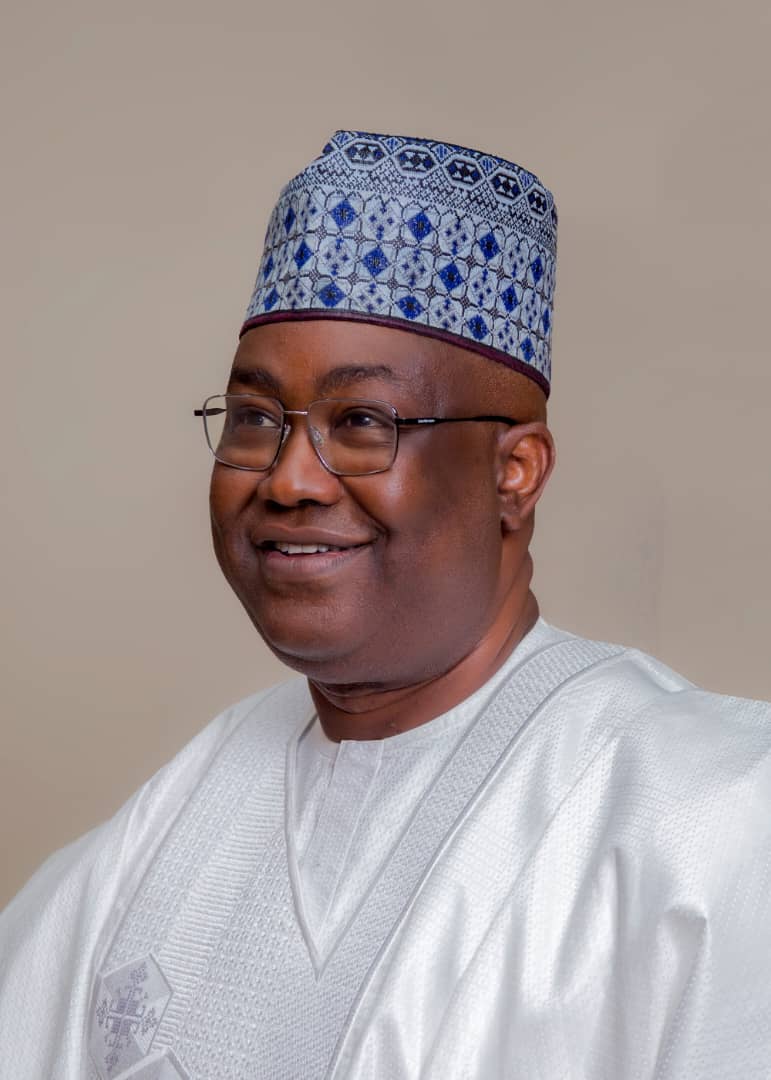
President of the Nigeria Labour Congress (NLC), Comrade Joe Ajaero, has said the economic policy positions of Accord Party presidential candidate Dr. Gbenga Olawepo-Hashim and Social Democratic Party (SDP) candidate Prince Adewole Adebayo deserve serious public attention ahead of the 2027 presidential election.
Ajaero made the remarks during a weekend interview with Seun Okinbaloye on the Mic On podcast, while responding to questions about the economic proposals of former Vice President Atiku Abubakar. The interview was reported on October 4 and 5, 2026.
Rather than concentrating on Atiku’s proposals, the NLC president said he had considered the positions of Hashim and Adebayo and found their approaches sufficiently different to warrant further engagement.

“I have looked at Gbenga Hashim’s position and I think he’s an expert to an extent. I also looked at Adebayo. I may listen to them,” Ajaero said.
He contrasted the positions of the two candidates with those of Atiku Abubakar, Peter Obi and President Bola Ahmed Tinubu, whom he said had broadly similar economic thinking.
Ajaero further described the three politicians as “market people from far right,” while characterising the ideas of Hashim and Adebayo as “new ideas worthy of engagement.” Those descriptions were Ajaero’s assessment during the interview and not an independent characterisation by Entrust Media.
The comments have renewed attention on Hashim’s economic programme, particularly his Energy First agenda, which places affordable energy, domestic production, industrialisation and increased productive capacity at the centre of his proposed economic strategy.
Hashim has proposed a ₦605-per-litre starting petrol price, with a longer-term target of between ₦200 and ₦300 per litre. His proposal is based on reducing production costs, increasing domestic refining, raising crude oil output and improving efficiency across the petroleum value chain.
The Accord candidate has also pledged to increase Nigeria’s crude oil production to at least four million barrels per day within 24 months of assuming office. He has identified the recovery of existing oil assets, including thousands of shut-in wells, as a key part of the strategy.
According to Hashim, increased crude production would not be aimed solely at expanding exports. His proposal also emphasises supplying domestic refineries with crude, expanding refining capacity and using cheaper and more reliable energy to support manufacturing, agriculture, transportation and other productive sectors.
The proposed Energy First programme therefore links petroleum production with wider industrial development. Hashim has argued that Nigeria should use its energy resources to reduce domestic production costs, strengthen energy security and create the conditions for greater economic activity.
Ajaero’s comments come amid growing debate over the economic direction Nigeria should take ahead of the 2027 presidential election, with issues including fuel prices, energy supply, inflation, domestic production and workers’ purchasing power expected to remain central to the campaign.
For Hashim and Adebayo, the NLC president’s remarks have brought additional attention to their respective economic proposals as the political parties and candidates begin to define their positions ahead of the 2027 contest.