
…Threatens Defaulters With Heavy Fines and Factory Closure
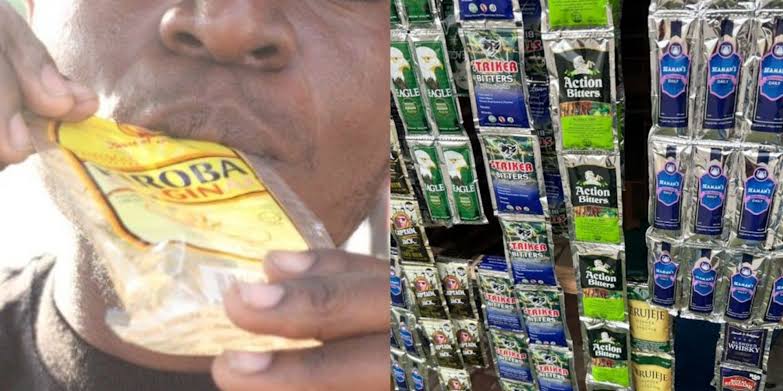
The National Agency for Food and Drug Administration and Control (NAFDAC) has ordered manufacturers of alcoholic beverages packaged in sachets and PET/plastic bottles below 200ml to immediately recall the products from the Nigerian market and stop further production.
The agency also warned manufacturers, distributors and retailers that continued violation of the ban could attract heavy fines, factory closure, suspension or revocation of product registrations and other regulatory sanctions.

NAFDAC Director-General, Prof. Mojisola Christianah Adeyeye, announced the latest enforcement measures on Monday, August 24, 2026, during a press briefing in Lagos.
The directive comes as the agency steps up its nationwide crackdown on prohibited alcoholic drinks still being found in markets, warehouses, distribution centres, bars, motor parks and retail outlets.
According to Adeyeye, manufacturers affected by the directive must withdraw the banned products from distributors, warehouses and other points across the supply chain. The recalled drinks are to be documented, verified and destroyed under NAFDAC’s supervision, with manufacturers expected to bear the cost of the exercise.
NAFDAC Begins Wider Market Crackdown
The latest action represents a further expansion of NAFDAC’s enforcement campaign.
Adeyeye said the agency adopted a tiered enforcement strategy, beginning with manufacturers before moving to distributors and, ultimately, retailers. The objective is to ensure that prohibited products are removed not only from production facilities but also from the final points where consumers can purchase them.
The agency’s enforcement teams have already uncovered banned alcoholic products in parts of the country’s distribution network. Some facilities found producing the prohibited pack sizes have been shut down, while NAFDAC continues to monitor the supply chain for further violations.
Adeyeye warned that manufacturers should not attempt to circumvent the ban by moving production equipment or continuing operations through unregistered facilities.
She said facilities shut for non-compliance would only be considered for reopening after NAFDAC verifies that production lines used for the banned pack sizes have been dismantled, permanently disabled or properly reconfigured.
Companies that continue to violate the directive could also be placed on NAFDAC’s Regulatory Watchlist, have their product registrations suspended or revoked, and face criminal prosecution where applicable.
Manufacturers Sign Enforcement Undertaking
The latest recall order follows an Irrevocable Enforcement Undertaking signed by the Distillers and Blenders Association of Nigeria (DIBAN), the Association of Food, Beverage and Tobacco Employers (AFBTE) and their member companies.
Under the undertaking, affected manufacturers committed to stopping production of alcoholic drinks in sachets and PET bottles below 200ml, recalling products already in circulation and submitting compliance reports to NAFDAC.
Adeyeye said the three largest manufacturers, which she said account for about 80 per cent of the market, had complied with the directive in the two weeks preceding Monday’s briefing. She added that seven companies had fully met the requirements.
Why NAFDAC Is Enforcing the Ban
NAFDAC says the restriction is primarily a public health measure, particularly aimed at reducing children’s access to alcoholic beverages.
According to the agency, research informing the policy showed that a significant proportion of minors and underage consumers obtain alcohol in sachets and small PET bottles.
Adeyeye said 47.2 per cent of minors and 48.8 per cent of underage consumers surveyed obtained alcoholic drinks in sachets, while 41.2 per cent of minors and 47.2 per cent of underage consumers obtained them in PET bottles.
She stressed that the government’s policy was not a blanket ban on alcohol consumption. Rather, it targets packaging formats that make highly concentrated alcoholic beverages relatively cheap, portable and easier for young people to access.
Ban Took Effect in January 2026
The prohibition followed several years of consultations between the government, regulators and industry stakeholders.
NAFDAC first raised concerns about the widespread availability of high-alcohol-content drinks in sachets and small bottles in 2018. Manufacturers were subsequently given a transition period to reconfigure their production lines and move to larger packaging.
The deadline was later extended to December 31, 2025, after which the full prohibition took effect on January 1, 2026. The ban covers alcoholic beverages packaged in sachets, PET/plastic bottles below 200ml and, according to NAFDAC’s enforcement position, glass bottles below 200ml.
Despite the ban, NAFDAC continued to find prohibited products in circulation, prompting the agency to intensify its enforcement operations.
The agency has now warned that the crackdown will continue until banned alcoholic beverages are removed from the Nigerian market.
Manufacturers, distributors, wholesalers and retailers are therefore expected to comply with the recall directive or face regulatory action.
Members of the public who encounter the manufacture, distribution or sale of prohibited alcoholic drinks have also been urged to report such activities to NAFDAC through its official channels or nearest office.
NAFDAC has made it clear that the current enforcement campaign is ongoing and that businesses dealing in the banned products should not expect the exercise to end after a single round of inspections.
Reporting date: Tuesday, August 25, 2026. NAFDAC’s latest directive was announced on Monday, August 24, 2026, in Lagos. The available reports do not state the exact time of the press briefing.