
I was recently in a conversation with a colleague who had just migrated to Canada. During our conversation, I kept reminding her of something I have always believed: Nigeria will be great again.
But she had seen, in less than 120 days of leaving the country, some of the realities that made her decision to leave understandable.
Then she showed me a video of her children in their new school.

I was stunned.
It was not merely the facilities that caught my attention. It was the philosophy behind the system, the idea that a child deserves to be treated with dignity, supported emotionally, and given an environment where learning can flourish.
She showed me how students were expected to change their shoes when they arrived at school, with designated shoes associated with individual students. She showed me the learning environment, where technology was integrated into teaching, and where there was even a space designed to help students cool off and regain their composure when they were unhappy or overwhelmed.
Canada’s education system is not perfect, and it would be wrong to romanticise another country. But its approach to education demonstrates what can happen when the safety, dignity and well-being of children are deliberately considered within the learning environment.
As I watched the video, I could not help but take her back to memory lane.
I remembered how she attended secondary school in Nigeria.
I remembered the absence of adequate textbooks and learning materials. I remembered how students who were not considered academically sharp enough could be treated harshly. I remembered how she would return from school and still go to the farm.
For many Nigerians of that generation, childhood was not simply about going to school, learning and coming home. It was about surviving circumstances that often demanded far more from a child than a child should have to give.
And then I began asking myself:
Where did we get it wrong?
Nigeria has conducted democratic elections since 1999, and our electoral environment has changed considerably over time. Today, technology and social media have made it much easier for citizens to communicate, organise, expose electoral practices and discuss politics publicly.
But one troubling feature of our electoral process remains the monetisation of political competition.
The Independent National Electoral Commission (INEC) identified vote buying and the monetisation of the electoral process among the challenges surrounding the 2023 general elections.
This is where my concern begins.
When a person’s vote becomes something that can be bought, the relationship between the citizen and the politician can begin to change.
The politician may no longer see the voter primarily as a citizen to whom a responsibility is owed, but as someone whose immediate need can be exchanged for political support.
And if leadership is obtained through transactions, what happens after the election?
The question becomes:
What obligation does the leader feel toward the people?
This is bigger than one politician or one political party.
It is about the kind of political culture we are creating.
A society that exchanges its collective future for immediate gratification risks creating incentives for public office to be viewed as an opportunity for personal advancement rather than a responsibility to build institutions.
It can encourage a political culture where visibility takes precedence over value, personal wealth over public infrastructure, political loyalty over competence, and the next election over the next generation.
Meanwhile, the children remain the ultimate victims.
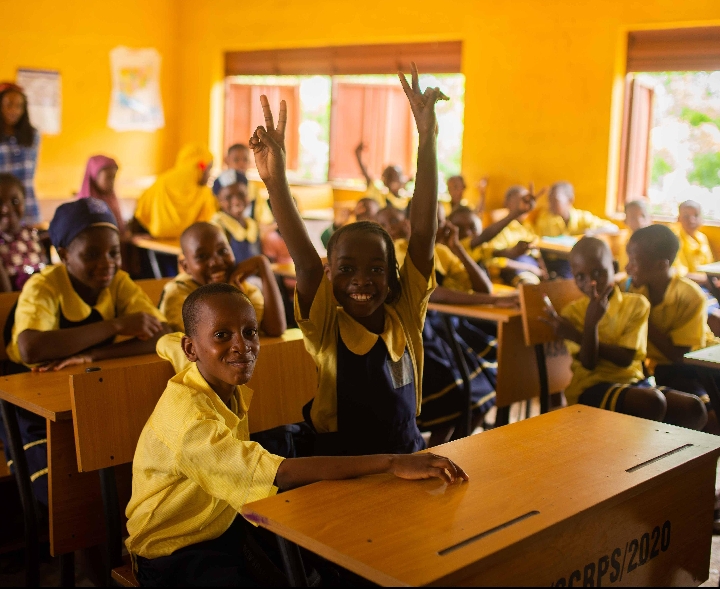
They are the ones sitting in classrooms without adequate facilities.
They are the ones struggling without learning materials.
They are the ones growing up without the educational opportunities that could unlock their potential.
They are the ones who will eventually inherit whatever country we leave behind.
So when I tell my colleague that Nigeria will be great again, I am not saying it because I cannot see what is wrong.
I say it because I can see what Nigeria could become.
We have intelligent children.
We have brilliant teachers.
We have hardworking parents.
We have entrepreneurs, professionals, farmers, scientists, journalists, engineers and young people with extraordinary creativity.
What we need is a system that respects the dignity and potential of its people.
Perhaps the real question before every Nigerian voter is not simply:
“What will I receive today for my vote?”
It should also be:
“What kind of country will my vote help create for the child who comes after me?”
Because democracy is not only about choosing who occupies an office.
It is about deciding what kind of society we are willing to build.
And before every citizen can truly be respected, the value of the citizen’s vote must be greater than the money placed in their hand on election day.
Nigeria’s greatness may not be found in the leaders we elect alone, but also in the value we place on our vote, our institutions and, ultimately, the future of our children.
Abioye Tosin Lawrence
Writer | Memoirist | Public Commentator