
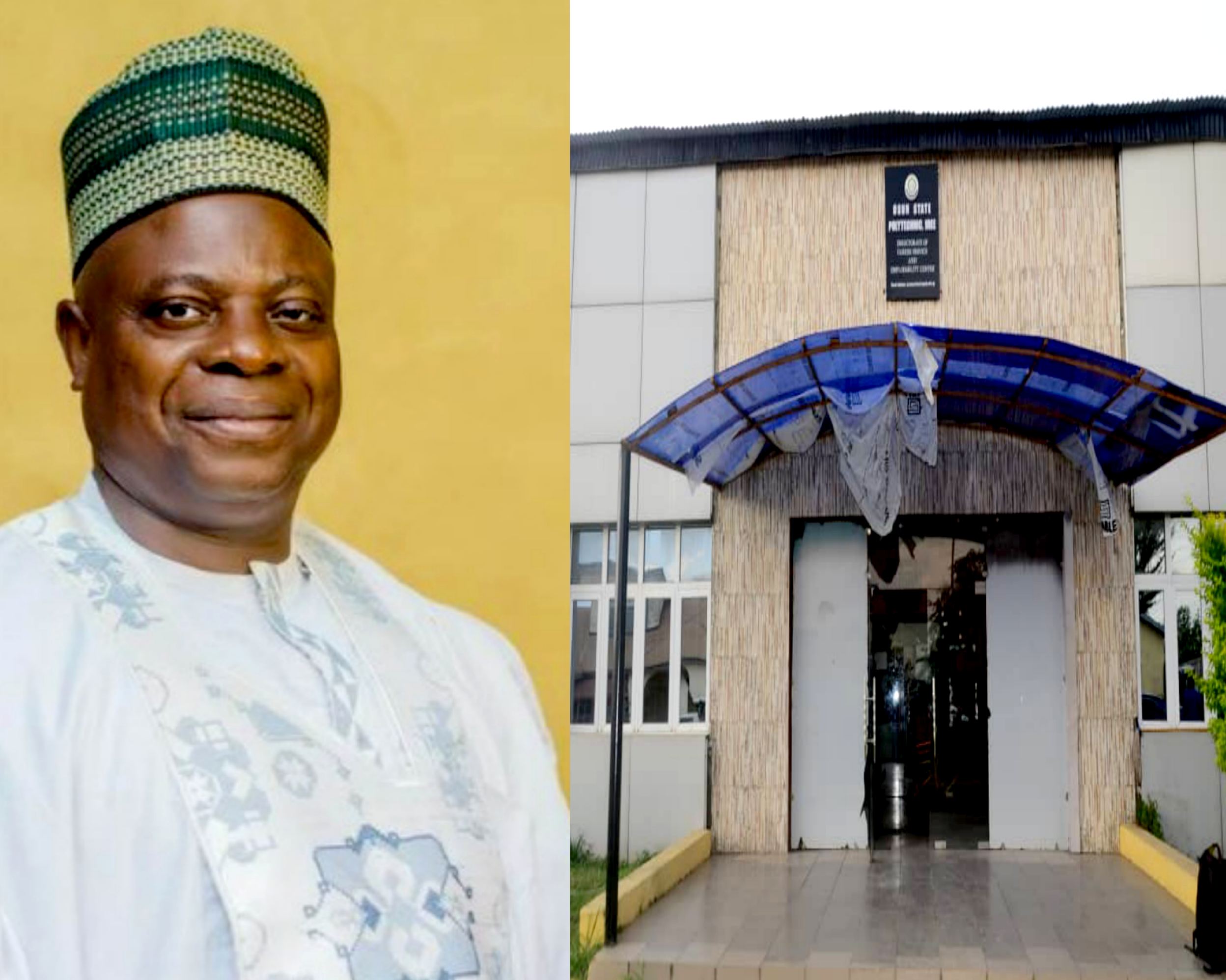
….How Rector Kehinde Alabi is steering Osun State Polytechnic towards a new era of digital assessment and globally competitive graduates.
Long before a graduate earns a place in a boardroom, a laboratory or a production floor, the future has already begun to judge them in the examination hall. Today, that judgment is no longer based solely on what students know, but increasingly on how well they can apply knowledge in a world shaped by technology, innovation and speed. As higher education responds to this reality, one truth has become increasingly clear: institutions that modernise the way they assess learning are better positioned to produce graduates who can compete beyond their borders.
That philosophy is quietly driving a significant transformation at Osun State Polytechnic, Iree (OSPOLY). Under the leadership of Rector Comrade Kehinde Alabi, the institution is gradually replacing the traditional examination model with Computer-Based Examinations (CBE), a reform aimed at strengthening academic integrity while preparing students for the realities of a digital economy.

The decision has not been without criticism. Concerns over power supply, computer facilities and digital literacy have featured prominently in discussions around the reform. Such concerns are understandable. Yet the history of institutional transformation shows that meaningful progress is rarely achieved without overcoming initial resistance. The real question is not whether challenges exist, but whether the long-term benefits outweigh the short-term difficulties.
Across the world, professional examinations, postgraduate admissions and employment aptitude tests have largely migrated to digital platforms. Computer literacy is no longer an added advantage; it has become a fundamental requirement. By exposing students to computer-based assessment before graduation, institutions reduce technology anxiety and equip them with the confidence needed to compete in an increasingly digital workplace.
The benefits extend well beyond students. Computer-Based Examinations enhance transparency through automated grading, strengthen examination integrity with randomized question banks, and significantly reduce the time required to process results. They also minimise the enormous cost and logistics associated with printing, transporting and securing thousands of examination materials every academic session.
Perhaps the greatest advantage, however, lies beyond the examination hall. As assessment becomes more efficient, lecturers can devote greater attention to practical teaching, research and innovation. Engineering students spend more time in workshops and laboratories. Science students focus on experimentation rather than memorisation. Management students gain practical exposure to accounting software, business simulations and data analytics, while students in Environmental Studies and Art & Design develop stronger digital and technical competencies. The result is an educational experience that reflects the enduring philosophy of polytechnic education, learning by doing.
It is this broader vision that distinguishes OSPOLY’s ongoing reform. The transition to digital assessment is not simply about replacing paper with computers; it is about redefining the relationship between teaching, learning and employability. In an economy where employers increasingly value practical competence alongside academic qualifications, assessment must become a tool for preparing students for the workplace, not merely for passing examinations.
Leadership is often defined by the courage to embrace necessary change, even when that change attracts criticism. Under Rector Comrade Kehinde Alabi, the Management of Osun State Polytechnic has chosen the more demanding path of reform, investing in a system designed to strengthen academic standards and position the institution’s graduates for greater relevance in a technology-driven world. The commitment of academic and non-academic staff, together with the adaptability shown by students, has been equally instrumental in sustaining this transition.
Educational institutions are ultimately remembered not for the systems they preserve but for the futures they create. Years from now, OSPOLY’s shift to Computer-Based Examinations may be remembered as more than a technological upgrade. It may stand as one of the defining reforms that strengthened academic integrity, expanded practical learning and produced graduates who are not only academically accomplished, but digitally confident, practically skilled and globally competitive.
Adekunle O. Abiodun
NATIONAL VICE PRESIDENT (ACADEMICS)
OSPOLY ALUMNI