
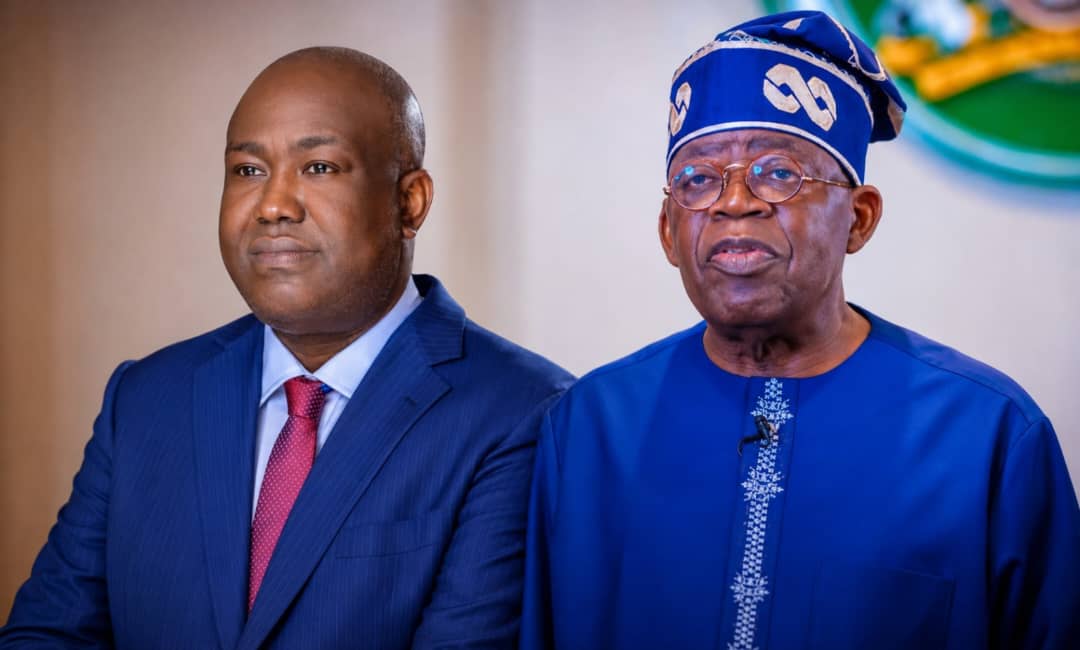
… Hashim is A Refreshed Brain with Robust Policy Plans
As Nigeria moves towards the 2027 general election, the political conversation is gradually shifting from familiar party battles to questions about the policies and ideas candidates intend to bring to governance.
For supporters of Accord Party presidential candidate, Dr. Gbenga Olawepo-Hashim, the former diplomat and businessman represents a different approach to opposition politics, built around economic production, affordable energy, industrialisation, job creation and national security.

That argument received fresh attention following comments by the President of the Nigeria Labour Congress (NLC), Comrade Joe Ajaero, who said the economic positions of Hashim and Social Democratic Party presidential candidate Adewole Adebayo deserve serious public attention ahead of the 2027 election.
Ajaero made the remarks during an interview with Seun Okinbaloye on Mic On, where he was asked about the economic policy position of former Vice President Atiku Abubakar. Rather than focus on Atiku, the NLC president said he had examined the proposals of Hashim and Adebayo and considered their ideas worthy of engagement.
“I have looked at Gbenga Hashim’s position and I think he’s an expert to an extent. I also looked at Adebayo. I may listen to them,” Ajaero said.
He contrasted their positions with those of Peter Obi, Atiku Abubakar and President Bola Ahmed Tinubu, whom he described as sharing broadly similar market-oriented economic thinking. Ajaero added that Hashim and Adebayo were presenting what he regarded as “new ideas worthy of engagement.”
One of the defining features of Hashim’s proposed economic programme is the Energy First agenda, which places affordable and reliable energy at the centre of Nigeria’s industrial transformation.
Hashim has proposed a starting petrol price of ₦605 per litre, with a longer-term target of between ₦200 and ₦300, which he says would be achieved through increased domestic refining, higher crude production, improved efficiency and lower production and logistics costs.
He has also proposed raising Nigeria’s crude production towards four million barrels per day within 24 months, while expanding domestic refining capacity and developing an integrated energy infrastructure capable of supporting industrial growth.
The central argument behind the proposal is that Nigeria should move beyond exporting crude oil and importing finished products, and instead use its natural resources to generate domestic industrial value.
Hashim has said an Accord government would provide Nigerian refineries with access to locally produced crude under a strategic domestic pricing framework, with the stated aim of helping them compete in African and international markets. He has also proposed additional refining capacity through government investment and strategic partnerships.
Another major component of Hashim’s programme is what he describes as “Production Over Consumption.”
The proposal seeks to reposition Nigeria as a producing economy by expanding manufacturing, agriculture, energy and other productive sectors while reducing dependence on imported goods.
Hashim has argued that increasing crude production should not simply result in more crude exports. Instead, he wants a greater share of the country’s oil and gas resources converted into energy, petrochemicals, industrial products and other forms of domestic economic value.
His supporters believe such an approach could help create jobs, strengthen local businesses and improve Nigeria’s productive capacity.
Security also forms part of the proposed agenda, with Hashim linking economic opportunity to the broader challenge of insecurity. His position is that productive engagement of young Nigerians, protection of farms and communities and stronger economic opportunities should complement conventional security measures.
The fourth pillar is accountable governance, with emphasis on reducing waste, improving government responsiveness and making public institutions more focused on citizens.
Hashim’s political campaign received a significant legal development on Monday, October 5, 2026, when the Federal High Court in Abuja affirmed him as Accord Party’s presidential candidate for the January 16, 2027 election.
Justice Mohammed Umar ordered the party to submit Hashim’s name to the Independent National Electoral Commission (INEC) and directed the commission to recognise him upon submission. The judgment followed Hashim’s challenge over Accord’s failure to upload his name after the disputed May 30 presidential primary.
The court rejected the party’s position that no valid presidential primary had taken place and held that the evidence before it supported Hashim’s emergence as the sole candidate. The judge also considered the ₦50 million paid by Hashim for the expression of interest and nomination forms.
Following the ruling, Hashim dedicated the victory to God, the judiciary, party stakeholders, members and his legal team. He also called for reconciliation, urging those involved in the dispute to put their differences aside and work together ahead of the 2027 elections.
“We won’t leave anybody behind. We should all come together and work for the party’s victory in the January 16, 2027 presidential election and all other elections,” Hashim said.
For Hashim’s supporters, the court victory and his economic proposals reinforce their argument that Accord should be regarded as a distinct opposition platform ahead of the 2027 contest.
They contend that the country needs a political alternative centred on policy rather than personality, with particular attention to the cost of energy, industrial production, employment, security and accountable government.
The description of Hashim as the “only main opposition” to President Tinubu, however, remains an assessment advanced by his supporters rather than an independently established political fact. Other parties and presidential aspirants are also positioning themselves as alternatives to the incumbent administration.
What is less disputed is that Hashim has placed economic policy at the centre of his campaign. His Energy First proposal, crude production targets, domestic refining strategy and emphasis on industrialisation provide specific areas that can be examined alongside the programmes of other presidential candidates.
As the 2027 election approaches, the debate will increasingly turn on how realistic, affordable and implementable the various proposals are — and how candidates intend to translate their campaign promises into measurable improvements in the lives of Nigerians.
For Hashim and his supporters, the message is straightforward: Nigeria requires an economy that produces more, creates jobs, uses its natural resources more efficiently and builds stronger domestic industries.
The 2027 election will provide the electorate with an opportunity to compare that agenda with the competing economic and governance proposals of other candidates.
By Tunde Fadipe
Former TIC Chairman, Isin Local Government
Aare Ooye of Oke Onigbin