
• Says INEC’s actions under disputed provisions are a nullity
• Warns 2027 election risks becoming a “coronation”
• Questions commission’s bid to restore provisions voided by Appeal Court

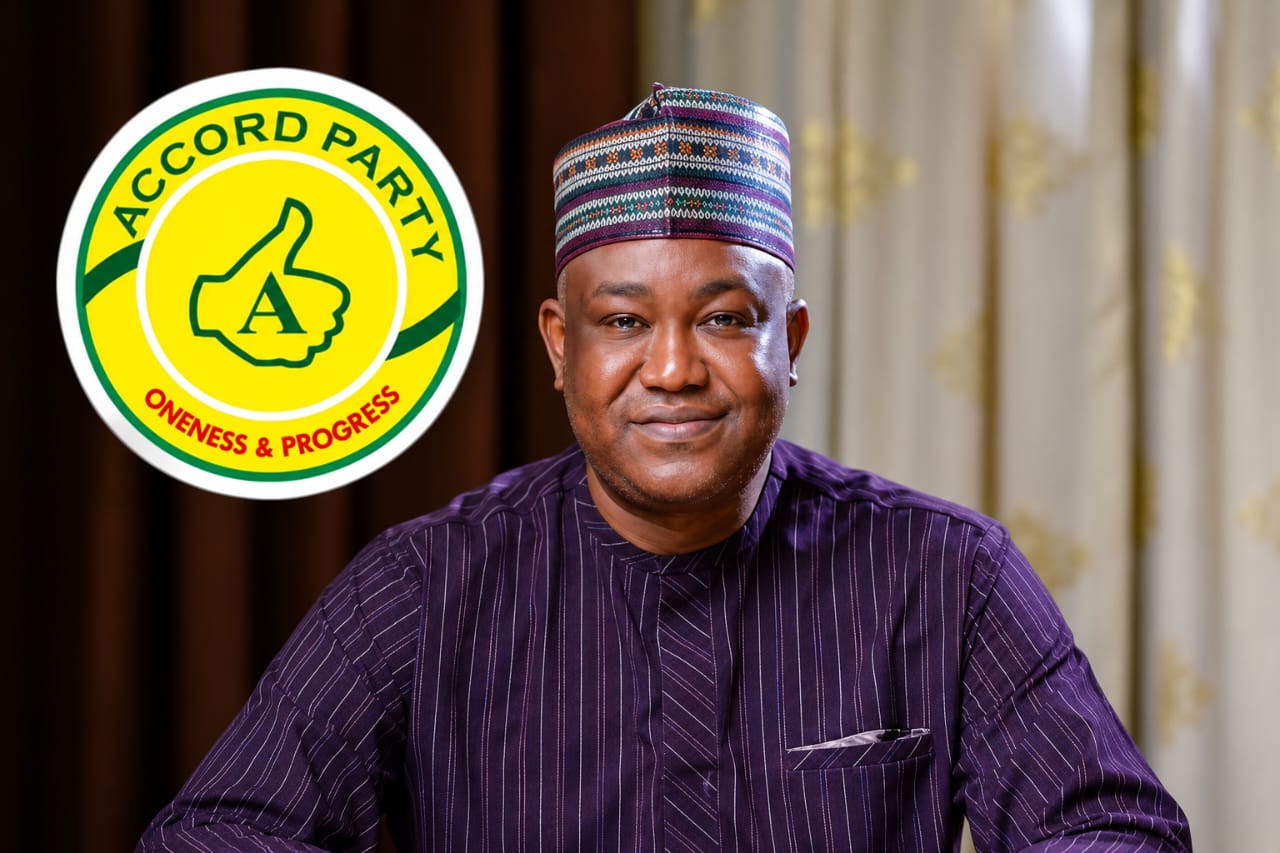
Accord Party presidential candidate and Co-Chairman of the Movement for Democratic Renewal, Dr Gbenga Olawepo-Hashim, has called for the disbandment and reconstitution of the Independent National Electoral Commission (INEC) following a Court of Appeal judgment on provisions of the Electoral Act 2026.
Hashim made the call in a statement on Friday, September 18, 2026, arguing that the electoral commission’s decision to appeal the judgment has raised fundamental questions about its role in administering elections ahead of the 2027 general election.
The controversy stems from a July 16, 2026 judgment of the Court of Appeal in Abuja, which voided Sections 77(5), 77(6), 77(7) and 84(2) of the Electoral Act 2026 after a challenge brought by the Zenith Labour Party (ZLP).
The affected provisions concern political party membership registers and the nomination of candidates for elective offices. The Court of Appeal held that the disputed provisions were inconsistent with relevant provisions of the 1999 Constitution, as amended.
The case began at the Federal High Court in Abuja, where the ZLP challenged the provisions as unconstitutional. The Federal High Court dismissed the suit on May 5, 2026, prompting the party to appeal.
The Court of Appeal subsequently allowed the appeal in part and voided the disputed provisions. INEC, dissatisfied with that decision, appealed to the Supreme Court.
The Supreme Court heard arguments in the matter on Wednesday, September 16, 2026, before a seven-member panel led by Justice Adamu Jauro and reserved judgment for a date to be communicated to the parties.
Hashim, however, argued that the implications of the Court of Appeal judgment extend beyond the immediate legal dispute, particularly with preparations for the 2027 elections already underway.
He maintained that actions taken by INEC under provisions that were subsequently voided by the appellate court should not be treated as legally settled pending the Supreme Court’s final determination.
Hashim questioned why INEC would seek to defend provisions that a competent appellate court had declared inconsistent with the Constitution.
“The Constitution is supreme. The National Assembly makes laws. INEC administers elections. INEC is not the Parliament and INEC did not make the Constitution,” he said.
He added: “So when a competent Court of Appeal declares specific provisions of an Electoral Act inconsistent with the Constitution, why is INEC fighting in court to restore those provisions rather than working with relevant political parties to address previous infractions?”
Hashim stressed that his objection was not to INEC exercising its legal right of appeal.
“Of course, INEC can appeal. The issue is not whether it has the right to appeal. The question Nigerians should ask is: what institutional interest does the electoral umpire have in sustaining provisions which a competent appellate court has declared inconsistent with the Constitution?” he said.
He argued that the situation could affect public confidence in INEC, particularly as the commission prepares to administer the 2027 general election.
According to Hashim, an electoral commission should be among the first institutions to insist on constitutional compliance rather than defend statutory provisions that have been judicially challenged.
“An electoral commission should be the first institution to insist on constitutional compliance,” he said.
Hashim also renewed his warning that the 2027 electoral process could become a “coronation” rather than an election if political participation and candidate selection are restricted.
“We warned ever before now that what INEC seeks to do in 2027 is a coronation, not an election,” he said.
He argued that democracy involves more than voting on election day, insisting that citizens and members of political parties must have a meaningful role in choosing candidates and leaders.
“An election means that citizens and members of political parties genuinely participate in choosing their candidates and ultimately their leaders,” he said.
Hashim also criticised some opposition politicians whom he accused of becoming less vocal after securing party tickets.
“Some opposition candidates are deceived because they have been given gate-pass to attend the coronation ceremony and so, have lost their voices,” he said.
“We shall continue to speak because we are not just politicians. We are democrats.”
The Accord candidate further questioned what he described as limited national attention to the legal dispute, particularly given its potential implications for political parties and candidate nomination ahead of 2027.
He called on Nigerians, legal practitioners and the media to pay closer attention to the constitutional issues before the Supreme Court.
“How can a Court of Appeal judgment declaring portions of the Electoral Act unconstitutional, followed by an appeal by INEC to the Supreme Court, not be one of the biggest stories in Nigeria?” Hashim asked.
He said Nigerians should understand the legal framework that would govern the 2027 elections before the polls take place.
“Why are we discussing the politics of 2027 without sufficiently discussing the legal architecture under which the 2027 election will be conducted?” he added.
Hashim insisted that his intervention was not solely motivated by his presidential ambition, describing himself instead as an advocate of constitutional democracy.
“I am not just a politician. I am first and foremost a crusader for the establishment and sustenance of the democratic order,” he said.
He consequently called for the disbandment and reconstitution of INEC, arguing that the institution needed to be rebuilt in a way that strengthens its independence and public credibility.
“I believe INEC should be disbanded and reconstituted. This is not a call to abolish elections or destroy electoral administration. It is a call to rebuild the institution responsible for conducting our elections,” Hashim said.
He said Nigeria needed an electoral commission that was professionally competent, transparent, constitutionally grounded and independent of political interests.
“INEC must be stronger than individual politicians. It must be stronger than the government. It must be stronger than the opposition. And its first loyalty must be to the Constitution and the democratic choice of Nigerians,” he said.
Hashim warned against an electoral system in which citizens are invited to vote after critical political choices have already been determined through processes beyond their control.
“The 2027 election must not become a ceremony for endorsing decisions already made elsewhere,” he said.
He maintained that Nigeria needed an electoral process in which the constitutional rights of political parties, candidates and voters were respected.
“Nigeria needs an election, not a coronation; constitutional supremacy, not administrative complicity with evil and impunity; and democratic choice, not institutional capture,” Hashim said.
The Supreme Court’s forthcoming judgment will determine the legal status of the disputed Electoral Act provisions and could have implications for political party membership registers and candidate nomination processes ahead of the 2027 general elections.