
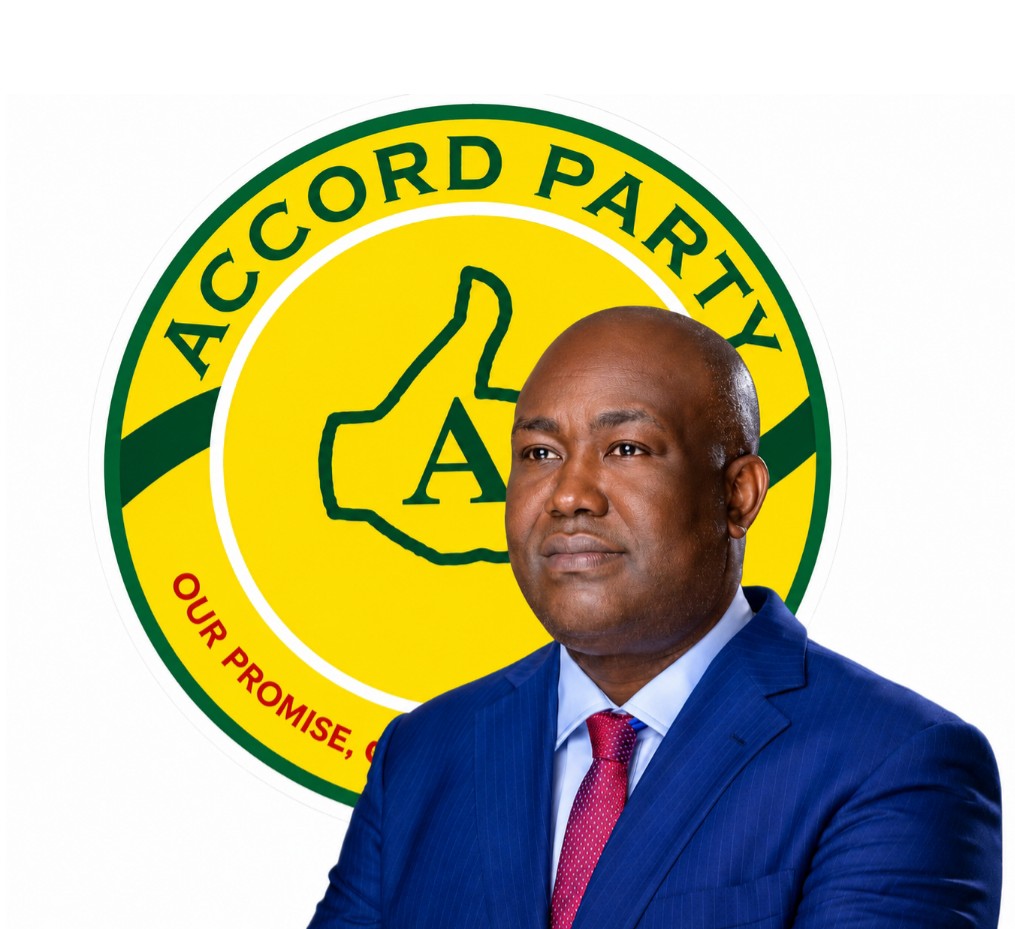
…Accord candidate unveils plan to revive 3,000 shut-in oil wells
…Reaffirms ₦605 per litre petrol price proposal
Presidential candidate of the Accord Party, Gbenga Olawepo-Hashim, has unveiled an ambitious plan to raise Nigeria’s crude oil production to at least four million barrels per day within 24 months if elected president.

Hashim made the promise during an appearance on Channels Television’s Politics Today programme over the weekend, where he outlined the energy strategy underpinning his proposed Energy First Presidential Agenda.
According to the Accord candidate, a major part of the plan would be the recovery of about 3,000 shut-in oil wells across the country.
Hashim said Nigeria already possesses a large number of drilled wells, discovered oil assets and supporting infrastructure that could be returned to productive use without waiting for lengthy new exploration and development cycles.
“We have oil wells that have already been drilled, assets that have already been discovered and infrastructure that have already been built. Our first task is to put these assets back to work for Nigeria.”
Nigeria’s crude production is currently around 1.5 million barrels per day, making Hashim’s proposed target of four million barrels a day a significant increase of about 2.5 million barrels daily.
He argued that government should first concentrate on restoring existing productive capacity rather than directing scarce public resources towards projects that may take years to generate economic returns.
Hashim specifically cited the Lagos-Calabar Coastal Highway, arguing that the government should prioritise investments capable of generating revenue and expanding productive capacity.
Under his proposed recovery programme, each viable inactive well would be assessed to establish the reason for its shutdown and determine the technical and financial intervention required to restore production.
The interventions, he explained, could include well workovers, well intervention programmes, artificial lift systems, repairs to gathering facilities, pipeline rehabilitation and improvements to crude evacuation infrastructure.
For Hashim, the inactive wells represent more than dormant petroleum assets. He described them as a major part of the productive capacity Nigeria is currently failing to utilise.
“The question is not how much oil Nigeria has underground. The question is why we are not producing the oil that our existing assets are capable of producing.”
To ensure accountability, Hashim proposed the establishment of a National Production Recovery Dashboard to track individual interventions, investments and additional barrels generated from recovered wells.
He said oil operators would also be required to provide clear production timelines, while government agencies would be expected to remove bureaucratic obstacles that prevent investments from translating into actual production.
The proposed increase in crude output forms part of Hashim’s broader argument for lower energy costs, including his previously announced petrol pricing proposal.
The Accord presidential candidate has proposed ₦605 per litre as a starting price for petrol, with a longer-term target of reducing the price to between ₦200 and ₦300 per litre.
Hashim said the strategy would be based on reducing the cost of producing and supplying energy rather than relying on subsidies to keep prices artificially low.
“You make energy cheap by making the cost of producing energy cheap.”
He said increased crude production would therefore have to go hand in hand with domestic refining, lower operating costs, transparent petroleum-sector accounting, infrastructure rehabilitation and exchange-rate stability.
Hashim stressed that his four-million-barrel target would not be solely about exporting more crude oil. He said his administration would seek to expand domestic refining capacity so that Nigeria could meet more of its own demand for petrol, diesel, aviation fuel and other petroleum products.
He further linked the proposed expansion of the oil sector to a broader energy transformation involving gas-to-power projects, independent power generation, captive and embedded power systems, mini-grids, petrochemicals and industrial energy infrastructure.
According to him, Nigeria must first tackle its severe energy deficit and provide affordable and dependable power for industries, agriculture, transportation and households.
Hashim said the energy transition debate should not lose sight of Nigeria’s immediate need to increase energy availability and affordability, particularly given the country’s abundant oil and gas resources.
Ultimately, he said his ambition was to transform Nigeria into a major energy power capable of supplying reliable crude and refined petroleum products to both domestic and international markets.
“We want Nigeria to become an energy power, not merely a country that happens to have oil,” Hashim said.