
The renewal of Governor Ademola Adeleke’s mandate in Osun State comes with heightened public expectations for continuity, improved governance and the consolidation of projects and policies initiated during his first term. As the administration prepares for another four years, its proposed 2027 budget offers an early indication of the scale of its developmental ambition and the resources it hopes to deploy to achieve its priorities.
At ₦927.37 billion, the proposed 2027 appropriation represents an increase of approximately ₦203.92 billion over the ₦723.45 billion approved for the 2026 fiscal year. The increase of about 28.2 per cent marks a significant expansion in the state’s spending framework. Tagged Budget of Advanced Commitment and Expansion, the proposal is expected to provide greater financial room for ongoing projects, new interventions and programmes designed to improve the living conditions of residents.
A major feature of the proposal is the allocation of ₦559.31 billion to capital expenditure, representing about 60 per cent of the total budget. Recurrent expenditure, covering personnel and overhead costs, is projected at ₦368.06 billion. This 60:40 capital-to-recurrent spending ratio places considerable emphasis on infrastructure and development projects. It also raises expectations that the proposed allocation will translate into visible improvements in roads, public facilities, healthcare, education and other essential services.

The administration has identified infrastructure, human capital development, revitalised agriculture, security, workers’ and pensioners’ welfare, and job creation as major priorities for the 2027 fiscal year. These areas touch directly on the economic and social concerns of ordinary residents. Their successful implementation could strengthen local economic activities, create employment opportunities, improve access to essential services and support rural communities. However, the impact will depend on how effectively projects are selected, funded, executed and monitored.
The proposed increase also comes with the responsibility of ensuring that the state’s revenue projections are realistic and sustainable. The budget estimates include ₦400.93 billion from the Federation Account Allocation Committee, ₦250.17 billion from internally generated revenue and ₦230.65 billion in receipts from development partners. Achieving these projections will require effective revenue administration, improved economic activity and reliable development partnerships. Any shortfall could affect the pace of implementation and the government’s ability to meet its spending commitments.
Beyond the size of the appropriation, the more important test will be the quality of delivery. Residents will expect to see completed roads, functional health facilities, improved schools, stronger agricultural support systems and practical employment opportunities. The government must therefore ensure that public funds are deployed efficiently, procurement processes remain transparent and ministries, departments and agencies are held accountable for their responsibilities. Legislative scrutiny and public oversight will also be important in ensuring that budgetary promises translate into measurable outcomes.
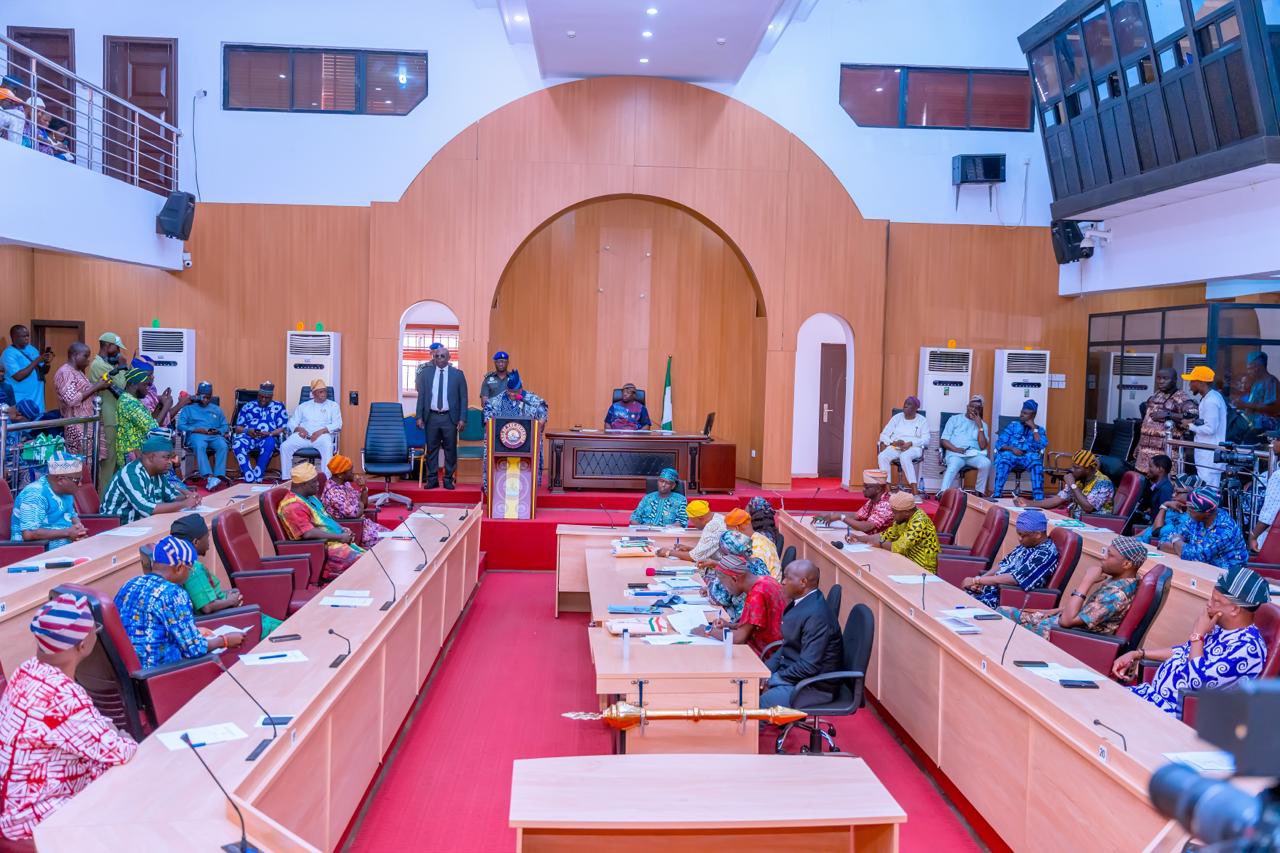
As the proposal proceeds through the Osun State House of Assembly, attention should extend beyond the headline figure to the details of sectoral allocations, project timelines and implementation strategies. The legislature has a responsibility to examine the estimates in line with the state’s financial realities and development needs, while the executive must demonstrate the capacity to implement the approved appropriation. A larger budget, by itself, does not guarantee development; its value will ultimately be measured by the results it delivers to the people.
For Adeleke’s incoming second term, the ₦927.37 billion proposal therefore represents both an opportunity and a test of public trust. The expanded fiscal framework creates room to consolidate previous interventions and pursue fresh priorities, but it also raises the standard of accountability expected from the administration. Ultimately, Osun residents will judge the 2027 budget not merely by the amount announced but by the projects completed, services improved, opportunities created and the difference made in their everyday lives.