
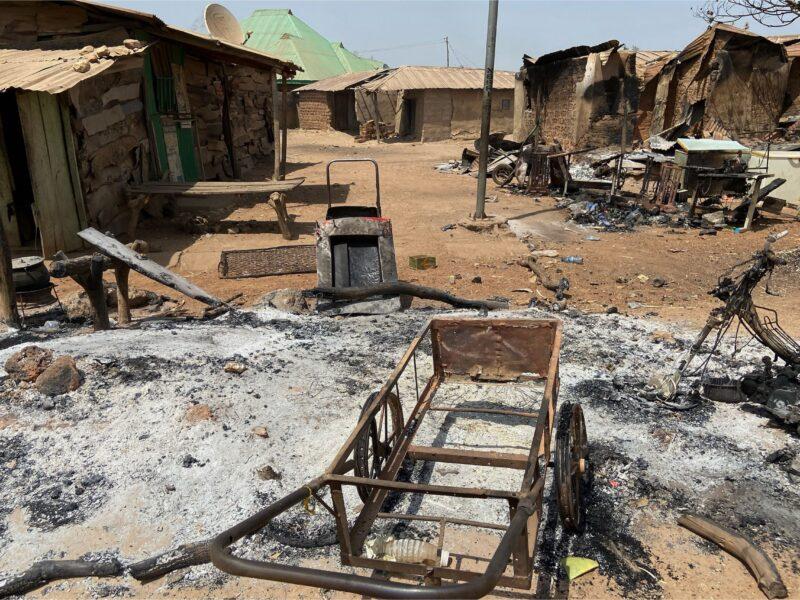
Presidential aspirant of the Peoples Democratic Party (PDP), Dr. Gbenga Hashim, has described the recent massacre in Woro community, Kwara State, as a disturbing indicator of the growing insecurity confronting Nigeria’s rural populations, warning that the nation is edging toward a dangerous norm where large-scale attacks unfold without timely or effective state intervention.
In a statement released over the weekend, Hashim said the magnitude and brutality of the attack require far more than official condolences, stressing the urgent need for accountability and transparent explanations from the country’s security leadership.
According to him, the incident represents an alarming breakdown in the state’s obligation to protect vulnerable communities. While expressing sympathy with the people of Woro, he insisted that expressions of solidarity must now be matched with concrete action and answers.

Hashim called on the United Nations Special Rapporteur on Human Rights to commence an independent international inquiry into the killings, arguing that Nigerians deserve clarity on reports that intelligence warnings about the attack were ignored or inadequately acted upon.
He noted that the tragedy starkly illustrates how exposed rural communities have become, observing that armed groups are increasingly able to carry out mass killings with little resistance or immediate consequence.
Raising concerns about the apparent absence of aerial support, Hashim questioned claims that Woro’s location hindered rapid response, pointing out that Nigerian Air Force assets operate along the Wawa New Bussa axis, a short flight from the affected community.
He challenged security authorities to explain why emergency air intervention was not deployed, especially given Nigeria’s demonstrated capacity for swift aerial operations in comparable or even more distant locations.
Hashim also drew attention to what he described as troubling inconsistencies in military responsiveness, recalling instances where Nigerian forces intervened beyond the country’s borders to stabilize political crises and halt violence.
He argued that the inability to prevent or disrupt the Woro killings represents a significant departure from Nigeria’s historic role and capabilities in regional peacekeeping and conflict resolution.
The PDP presidential hopeful further questioned reports that security personnel were initially deployed to the area but later withdrawn, demanding full disclosure on who authorized such decisions and on what grounds.
Describing the situation as deeply concerning, Hashim said it was unacceptable that attackers could reportedly operate for hours, despite distress alerts, and escape without arrests or credible identification days after the incident.
He warned that repeated failures in rapid security response are emboldening violent actors while eroding public confidence in government, particularly among rural populations who already feel marginalized.
Hashim cautioned that sustained neglect of community security could drive citizens toward self-help mechanisms, including vigilante actions, ethnic profiling, and the proliferation of unregulated armed groups, thereby deepening national instability.
He called on the Federal Government, the Nigerian Air Force, and other security agencies to publish a comprehensive operational account of the incident, detailing timelines of intelligence receipt, distress calls, response measures, and the reasons aerial assets were not deployed.
In addition, he advocated far-reaching reforms to strengthen rural security architecture, including rapid-response frameworks, expanded aerial surveillance, helicopter-based intervention, and the establishment of forward operating bases in high-risk and border communities.
Hashim emphasized that the Woro killings should be seen not as an isolated tragedy but as a warning signal of escalating insecurity across the North Central region, particularly in communities bordering Niger State and the Kainji Lake corridor.
He warned that without decisive and coordinated action, Kwara State risks becoming a new epicenter of banditry and rural terrorism, with severe implications for agriculture, livelihoods, and social cohesion.
“Nigeria must not become desensitized to mass killings,” Hashim said, adding that an attack lasting hours without effective state response constitutes a grave national emergency requiring immediate and sustained intervention.